Who Is Responsible for Replacing Electric Meter Box?
By: Matt Pinkston - Master Electrician | June 29, 2026 | (Updated June 2026)
Who is Responsible for Replacing Electric Meter Boxes?
Why This Question Comes Up
Most homeowners don't go looking for this answer. It finds them. A storm rolls through. The lights flicker. Maybe a limb takes down a line. You make the call expecting a quick fix, only to hear:
"That part is the homeowner's responsibility, you need an electrician."
That's the moment everything changes. Now it's not just a power issue... It becomes a who's paying for this situation. And thats exactly why understanding the "line of demarcation" matters before something goes wrong, not after.

The "Line of Demarcation": Who Owns What?
This is the legal boundary that separates the utility company’s equipment from yours.
In Southwestern Indiana, whether you’re dealing with CenterPoint Energy or Duke Energy, this line determines who is responsible for repairs, replacements, and code compliance.
Understanding it can save you:
- Hours of phone calls
- And delays in getting power restored
In most cases, the homeowner is responsible for replacing the electric meter box.
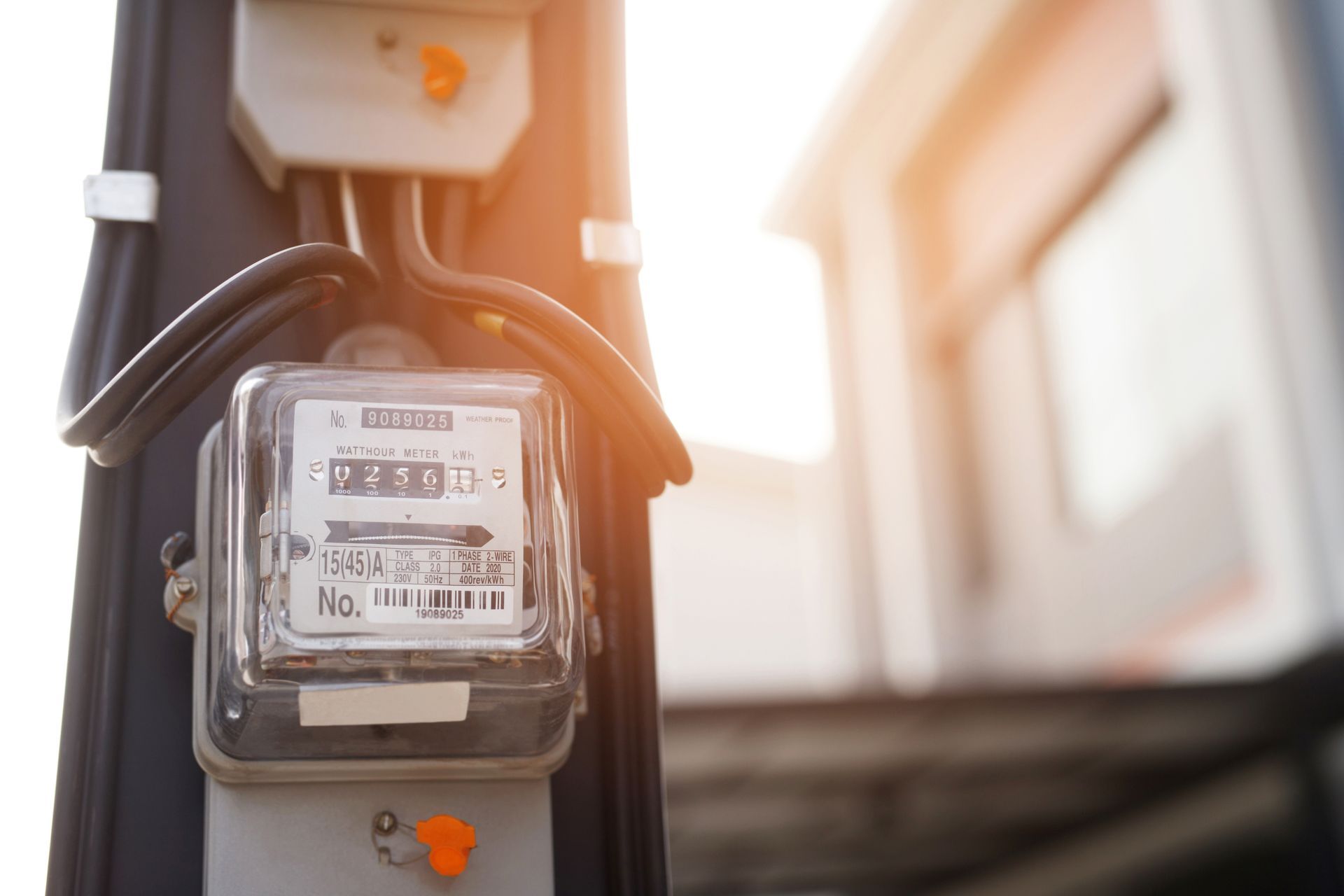
The utility company owns the meter itself and the incoming power lines, but the equipment attached to your home—especially the meter socket—is typically yours to maintain and replace.
Overhead Electrical Service
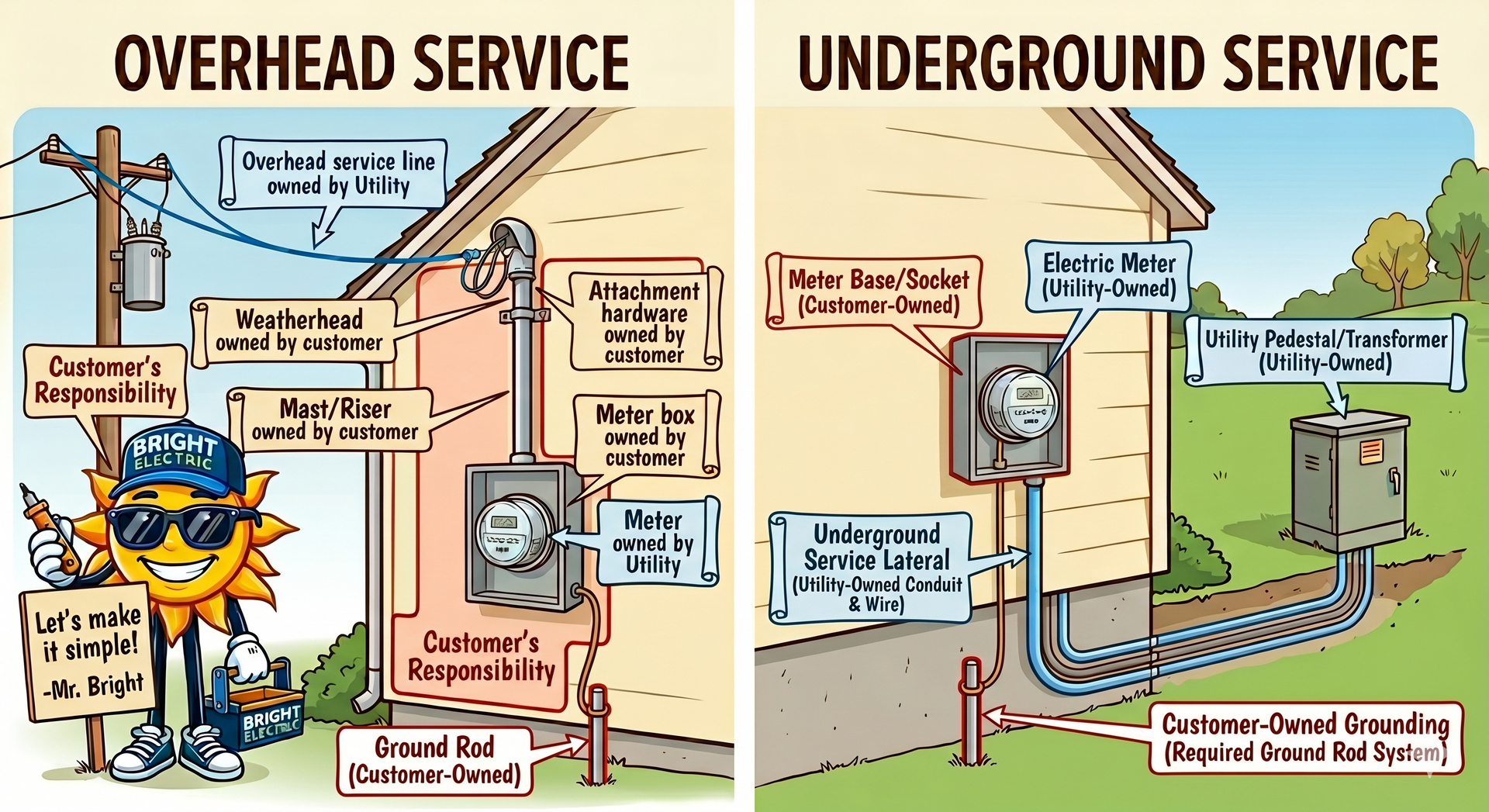
If your power comes from a utility pole to your home through the air, this is considered overhead service.
The Utility Owns:
- The service drop (the wires coming from the pole)
- The electric meter itself
The Customer Owns:
- The weatherhead (the cap at the top of the pipe)
- The service mast/riser (the vertical pipe)
- The meter socket (the metal box attached to your home)
Mr. Bright Says:
“Even if you have a brand-new smart meter installed, you still own the box it sits in. The utility owns the
brain—you own the
cradle.”
Underground Electrical Service
In many newer Evansville neighborhoods, power lines are buried. This setup tends to cause more confusion.
The Utility Owns:
- The service lateral (the wire in the ground)
- The transformer or pedestal at the street
The Customer Owns:
- The meter socket on your home
- The conduit that protects the wiring as it enters your meter socket
The Grounding System:
You are also responsible for your home’s grounding electrode system, the copper wire and ground rods driven into the earth. This is not optional. It’s one of the most important safety components in your entire electrical system.
Pole-Mounted Meters (Rural or Private Poles)
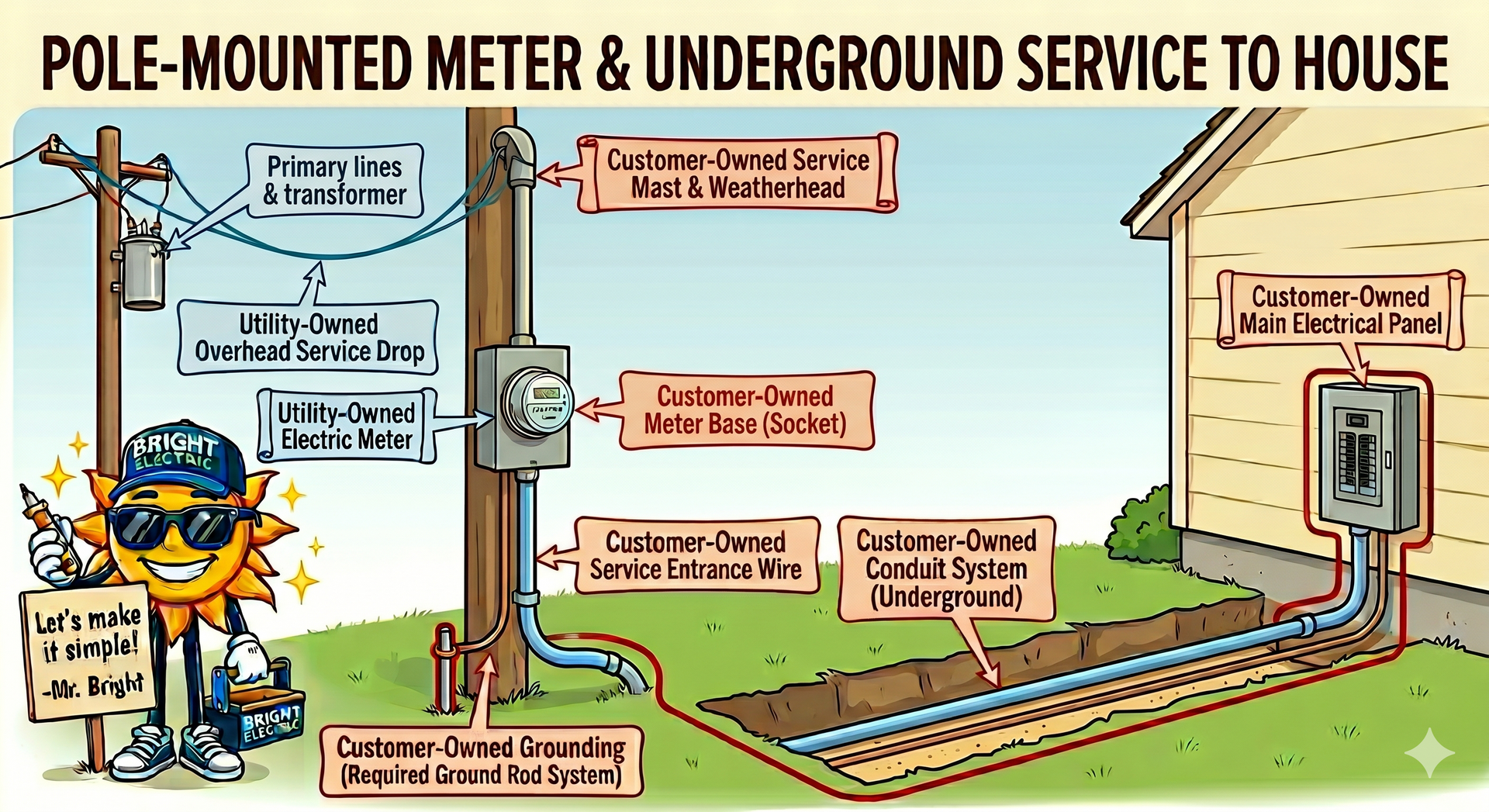
On some properties, especially outside city limits, the meter is mounted on a pole away from the house.
Ownership Rule:
Once power passes through the meter:
Everything after that point is the homeowner’s responsibility
That includes:
- Underground runs
- Conduit
- Wiring to the house
If there’s a fault between the pole and your home, the utility company will not repair it.
Signs Your Meter Box May Need Replacing
This is where things go from “technical” to real life.
Most homeowners don’t think about their meter socket… until it gives them a reason to.
Here are some of the most common warning signs we see in Evansville:
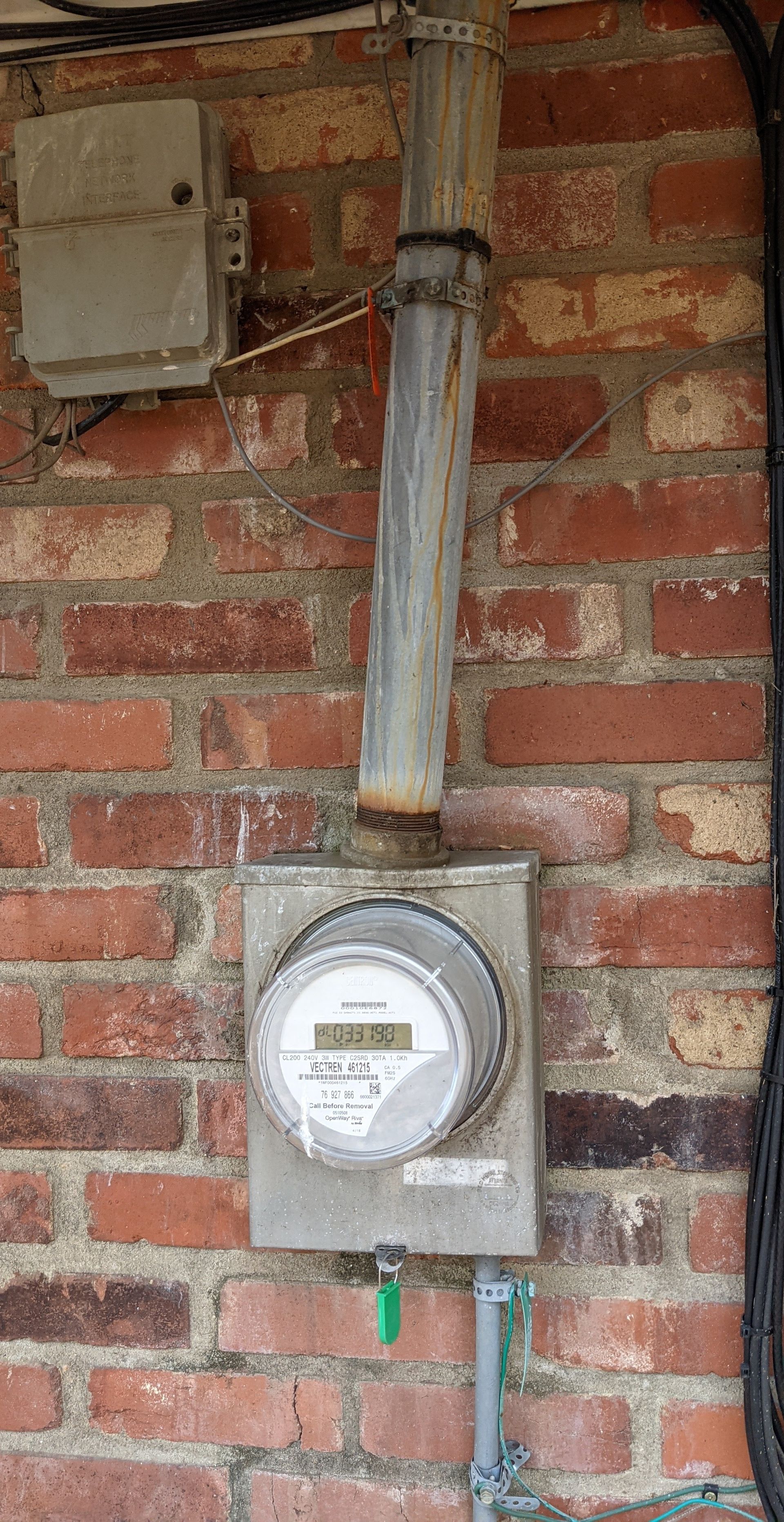
- Rust or corrosion on the meter box (one of the most common issues we see—especially in older homes. You can read more about that in our detailed guide on electrical panel corrosion.)
- A loose or damaged meter socket
- Flickering lights that don’t trace back to a breaker issue
- Burn marks or discoloration around the meter or wiring
- Moisture or water intrusion
If you’re noticing any of these signs, it’s worth having a professional take a look. Our electrical troubleshooting and repair services are designed to pinpoint issues like these before they turn into bigger problems.
We see these issues all the time across Evansville and Warrick County—especially in older homes where the original service equipment is still in place. None of these are “wait and see” problems.
Because this equipment handles the full, unfiltered power coming into your home—before it ever reaches your panel. When it fails, it doesn’t fail quietly.
Worried water may have leaked into your electric panel? Check out our guide on replacing electrical panels.
Why the Utility Won’t Repair Your Meter Box
Utility companies like CenterPoint and Duke operate under strict service regulations.
They are legally prohibited from working on customer-owned equipment.
If a technician comes out—for a smart meter installation or service call—and finds a damaged meter socket, they may issue what’s called a:
Red Tag
This is a safety notice that:
- Prevents power from being restored
- Requires repairs to be made by a licensed electrician
- Ensures everything meets current code before reconnection
It’s not optional and it’s not something the utility will fix for you.
What Does It Actually Cost to Replace a Meter Box?
This is usually the next question and understandably so.
The cost can vary depending on:
- The condition of the existing equipment
- Whether upgrades are required to meet current code
- Coordination with the utility company
- Accessibility (overhead vs underground)
In many cases, a straightforward replacement is manageable in just a few hours.
But if your service needs to be upgraded to meet modern standards, the scope and cost can increase.
The key thing to understand is this: This isn’t just a “box swap.” It’s part of your home’s primary connection to the electrical grid.
Done right, it protects your home.
Done wrong, it creates long-term risk—and in some cases, serious safety hazards.
Need Clarity Before It Becomes a Problem?
Meter sockets don’t usually fail at a convenient time.
And when they do, you’re suddenly dealing with:
- The utility company
- Code requirements
- Power being shut off
- And a repair that can't wait
If you’re unsure where your responsibility begins or something just doesn’t look right, it’s worth getting ahead of it.
Bright Electric specializes in service entrance evaluations throughout the Evansville area.
We’ll walk your setup, explain exactly what you own, and give you a clear path forward. No guessing and no runaround.
Contact Bright Electric today and get clarity before it turns into a red tag situation.
Final Thought
Most electrical problems don’t start as emergencies.
They start as small signs
a little rust, a loose connection, a flicker you can’t quite explain.
The difference is knowing what you’re looking at…
and knowing where your responsibility begins.
That’s where the right information and the right electrician makes all the difference.
If you're located in Evansville or the
surrounding areas, we can help.

Written & Reviewed by:
Matt Pinkston — Master Electrician (Vanderburgh County License #29714)
Operations Manager at Bright Electric
27+ years of electrical experience in Evansville and the Tri-State area.
Specializes in residential and commercial electrical work, NEC code compliance, and modern electrical safety standards.